
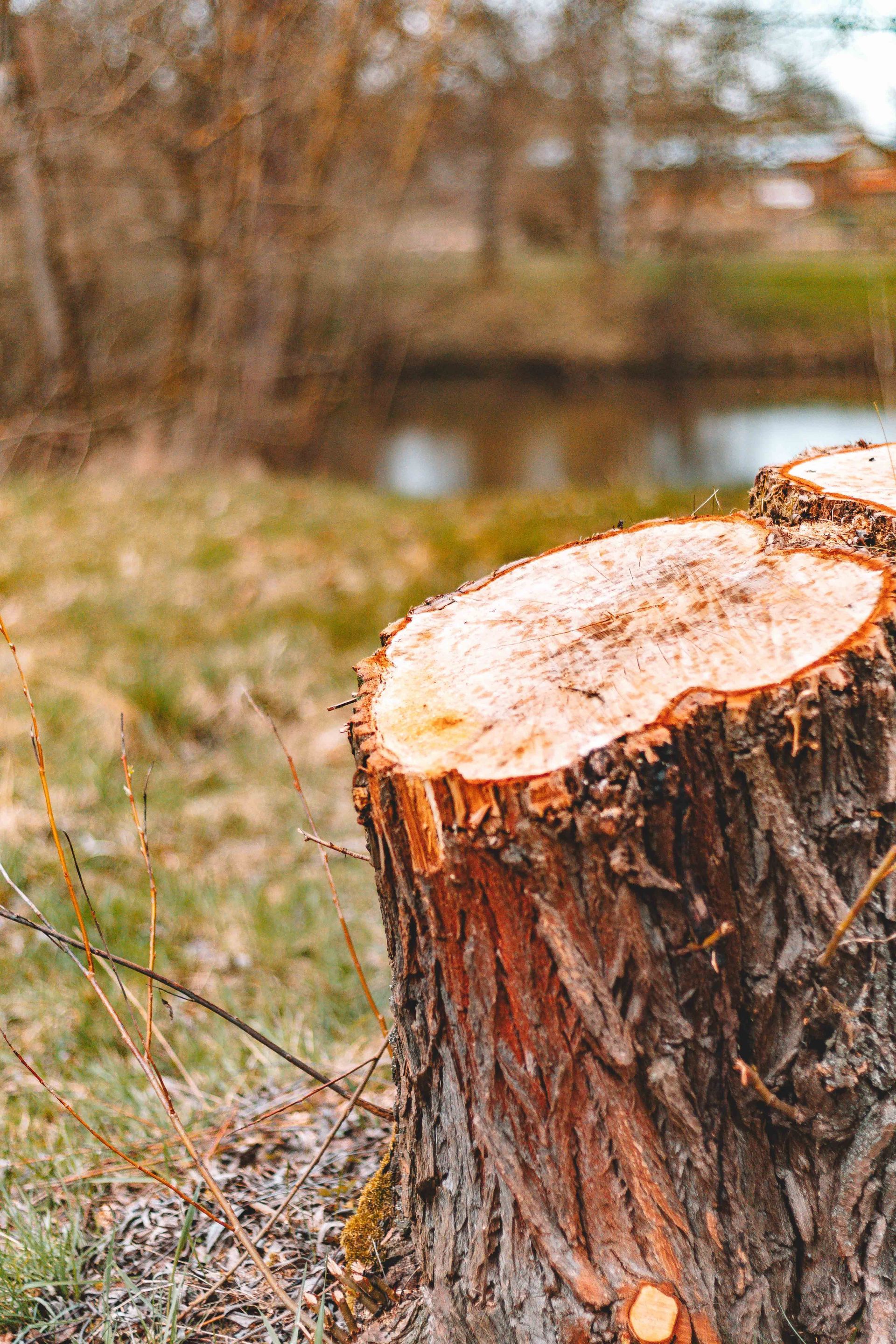
Stumps Ground to the Depth Your Plans Require
Stump removal in Indianapolis for stumps that interfere with landscaping, mowing, and yard use
A stump left at grade after a tree comes down doesn't stay inert—it becomes a fixed obstacle that interrupts mowing patterns, creates a tripping hazard, and attracts wood-boring insects that can spread to adjacent live trees or structural lumber. Holmes Construction & Roofing Solutions handles stump removal in Indianapolis with the owner performing the work personally and grinding depth customized to what you actually plan to do with the space. That distinction matters because a stump ground two inches below soil level is appropriate for replanting grass but not for eliminating root development, and conflating the two produces results that don't match the homeowner's intent.
Before grinding begins, the owner assesses the stump, the visible root system, and the surrounding landscape, then discusses your goals directly. Whether the plan is to seed the area, install a bed, build over the space, or simply clear it for mowing, the grinding depth is set accordingly. Shallow grinding leaves a backfill-ready cavity; deeper passes address root mass that would otherwise continue to spread and surface. The approach is determined by the customer's situation, not a default setting applied to every job.
Set up a time for the owner to look at the stump and surrounding area so the grinding depth and scope can be confirmed before work starts.
What Stump Grinding Accomplishes Versus What It Leaves Behind
Stump grinding uses a rotating cutting wheel to reduce the stump and surface roots to wood chips in layers, working progressively deeper with each pass. The grinder is positioned over the stump and moved across the face in overlapping sweeps, removing material in manageable increments rather than attempting the full depth in one cut. Root spread that extends beyond the immediate grinding zone will remain in the ground; whether that matters depends on what you're planning for the area and how extensive the root system is, which the owner evaluates during the initial assessment.
When grinding is complete, the stump is gone below the surface and the space is usable. The chips left in the cavity can be raked out for disposal or worked back into the soil as fill, depending on how the area will be finished. In yards throughout areas like Brownsburg and Avon, where properties often have wide open lawn spaces that homeowners maintain for mowing and landscaping, eliminating a stump at the right depth means the area integrates cleanly rather than leaving an obvious patch.
Holmes Construction & Roofing Solutions can coordinate stump removal at the time of a tree removal or as a standalone service for stumps left by prior work. The owner will clarify what the finished area will look like based on the depth selected so expectations are accurate before the job begins.
Questions Before Starting Your Stump Removal
These questions address how stump removal is performed, how grinding depth is determined, and what the finished area will look like based on different approaches.
How is grinding depth determined for each stump?
Depth is set based on what you plan to do with the space—seeding requires grinding to just below soil level so the cavity fills and settles evenly, while eliminating root spread requires deeper passes that remove more of the lateral root mass.
What remains in the ground after stump grinding is complete?
The stump and immediate surface roots are removed, but lateral roots extending further into the yard remain underground; in most cases these decay naturally over time without causing surface disruption.
Why do stumps attract pests even after the tree is removed?
Decaying wood retains moisture and provides a food source for carpenter ants, termites, and wood-boring beetles—insects that will move to adjacent structures or live trees once the stump is fully consumed, making removal a more practical long-term decision than waiting for natural decay.
What does the grinding area look like immediately after the work is finished?
The cavity will contain loose wood chips mixed with soil; the depth of the cavity depends on the grinding depth selected, and the chips can be left to settle as fill or raked out if you plan to sod or seed the area promptly.
How does an established root system affect the grinding approach?
Large-diameter stumps from mature trees have root flares that extend beyond the main stump face; the grinder is worked across those flares as well to prevent raised roots from resurfacing and interfering with mowing or landscaping near the removal site.
Holmes Construction & Roofing Solutions also performs stump removal in Avon, Greenwood, Fishers, Noblesville, and Brownsburg. Call (317) 862-0100 to have the owner assess the stump and confirm the right grinding depth for what you're planning to do with the space.