
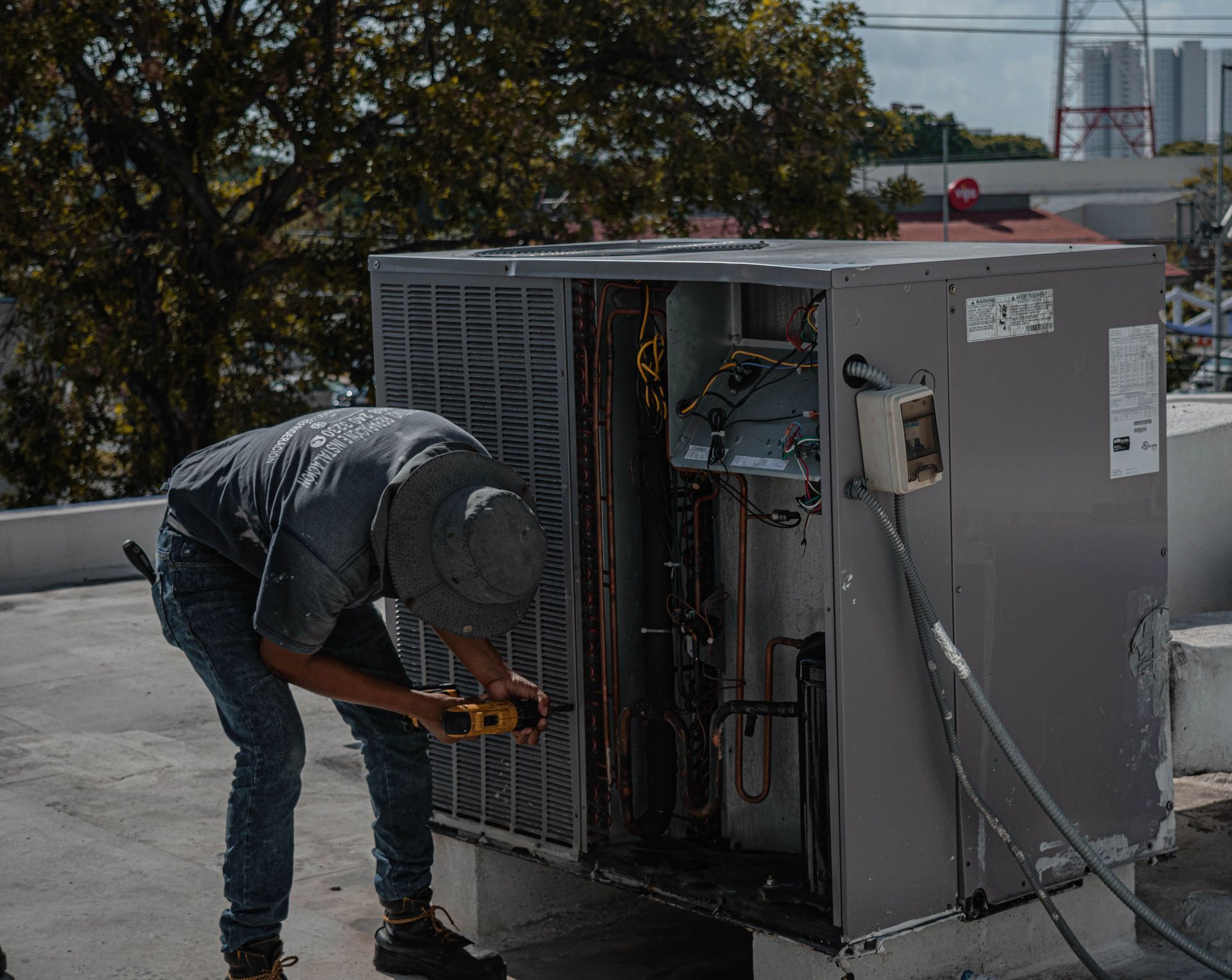
Heating and Cooling Systems That Work Reliably
HVAC Installation & Repairs in Indianapolis for systems that fail to heat, cool, or cycle correctly
Holmes Construction & Roofing Solutions handles HVAC installation and repair for Indianapolis homeowners who need a system that performs consistently, not one that limps through seasons with recurring faults. The owner personally handles every estimate and oversees all work from start to finish, which means the same person who diagnoses your problem is the one verifying the fix. That direct involvement eliminates the handoff gaps where repair details get lost between a salesperson and a technician.
For new installations, sizing and positioning decisions are made specifically for your property rather than applied generically. A system placed or sized incorrectly will short-cycle, struggle to maintain set temperatures, or create uneven distribution across rooms. For repairs, the owner diagnoses the problem directly, restores function, and tests the system before the job is considered complete. That testing step is not optional—it confirms the repair resolved the underlying issue rather than just cleared a symptom.
To start, schedule a property evaluation so the right system size and repair scope can be determined based on what your home actually requires.
How HVAC Work Is Done Correctly
Proper HVAC work begins with a site-specific assessment rather than a catalog selection. For installations, load calculations and duct layout factor into where equipment is positioned and how capacity is matched to the structure. In older Indianapolis neighborhoods like Beech Grove, homes built with different floor plans and ceiling heights than new construction require careful sizing decisions that a standard estimate process can miss. Every installation at Holmes Construction & Roofing Solutions is followed by a full operational test covering heating output, cooling output, and airflow balance before the job closes.
After an installation or repair is complete, you will notice that the system reaches and holds the set temperature without extended run times, without short-cycling, and without the uneven room temperatures that indicate airflow or sizing problems. A repair that only addresses a surface symptom will cycle a new fault within weeks; work done by someone who traces the fault to its origin stays resolved.
Whether the job is a full system replacement or a targeted repair, the owner's personal involvement across 37 years of experience means installation decisions are made with knowledge of what fails in practice, not just what meets minimum code. Work includes testing to verify the system operates correctly before the job is considered finished.
Common Questions About HVAC Installation and Repair
The questions below address how HVAC installation and repair work is actually performed and what property owners can expect during and after the process.
What determines whether a system should be repaired or fully replaced?
The decision depends on the age of the equipment, the nature of the failure, and whether the existing system is correctly sized for the structure. A compressor failure on a unit more than fifteen years old typically makes replacement more practical than repair, while electrical and control faults on newer equipment are generally repaired without replacing the system.
How is the right HVAC system size determined for a property?
System sizing is based on the square footage, ceiling height, insulation levels, and layout of your specific home rather than a square-footage rule of thumb. Undersized equipment runs continuously without reaching set temperature; oversized equipment short-cycles and leaves excess humidity in the air.
What happens during the testing phase after installation or repair?
The system is run through both heating and cooling operation to confirm output, airflow distribution, and cycling behavior match expected performance. In Indianapolis homes with older duct layouts, this step often surfaces airflow restrictions that would otherwise reduce efficiency after the equipment itself is already installed.
How should a homeowner prepare before an HVAC technician arrives for a repair diagnosis?
Clear access to the air handler, outdoor unit, and thermostat before the visit so the diagnostic process can move directly to the equipment without delays. Having a record of when the problem first appeared and what conditions trigger it helps narrow the diagnosis faster.
What are observable signs that an HVAC repair was completed correctly?
The system reaches the thermostat set point within a normal run cycle, no unusual sounds occur during startup or shutdown, and airflow from registers is consistent across rooms. If any of those conditions are absent after a repair, the underlying fault was not fully resolved.
Holmes Construction & Roofing Solutions also performs HVAC installation and repairs in Greenwood, Fishers, Noblesville, Brownsburg, and Avon. To discuss your specific system situation and get an accurate scope of work, call (317) 862-0100 and speak directly with the owner.