
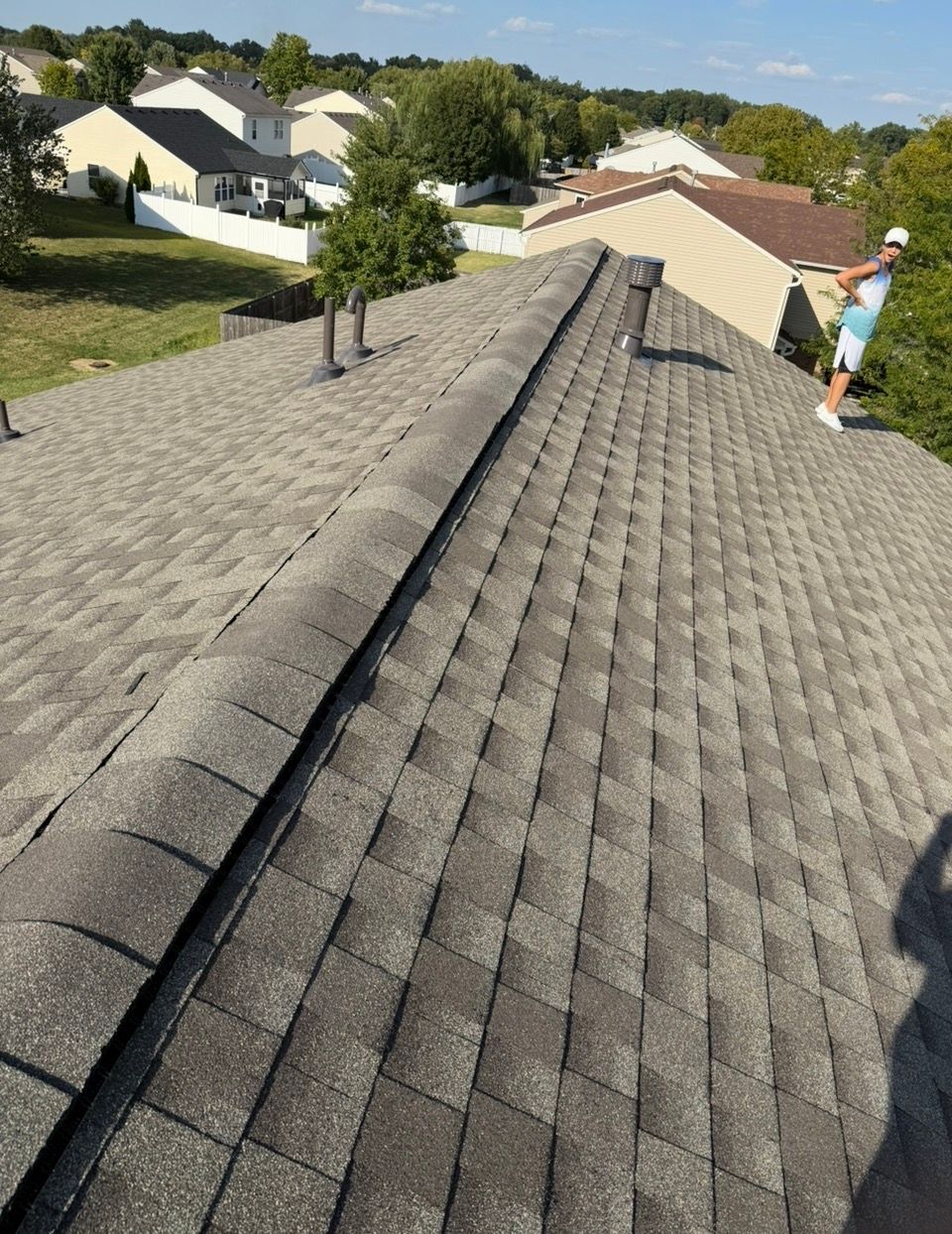
Old Roofing Removed, Deck Inspected, New System Installed
Roof replacement in Indianapolis for homes where shingle deterioration, structural damage, or repeated repairs have reached the end of practical service
A stripped deck tells the story a roof inspection from the surface cannot. When Holmes Construction & Roofing Solutions removes an old roof in Indianapolis, the owner inspects the exposed decking board by board before any new material goes down. That inspection catches structural damage in roughly one out of every ten replacements—rotted sheathing, delaminated plywood, or compromised rafters that were hidden beneath layers of shingles and felt. Repairing those conditions during replacement, rather than discovering them after the new roof is already installed, is the difference between a roof that performs for decades and one that develops the same interior moisture problems it was supposed to solve.
The replacement sequence begins with a complete strip of the existing roofing, including underlayment and any remaining flashing. Once the deck is fully exposed, the owner documents any damaged sections and repairs them before underlayment and new shingles are installed. A free estimate is provided before work begins so the total cost—including any deck repairs if they are identifiable in advance—is known upfront. Because the owner performs the work directly, what gets quoted is what gets built.
Request a roof replacement estimate to review the full scope of what your home's roof structure actually requires.
What the Deck Inspection Changes About the Job
Most roof replacements that develop early problems share one cause: the deck was not inspected or repaired before new material was installed. Moisture that has infiltrated through failed shingles or ice dam backup—a common failure pattern in Indianapolis homes that experience sustained cold periods—wicks into oriented strand board or plywood sheathing over multiple seasons. That absorbed moisture does not dry out when shingles are installed on top of it; it continues deteriorating the wood from beneath, eventually compromising fastener holding strength and allowing the new roof to shift or lift at affected areas.
Once a replacement is complete with proper deck preparation, the finished roof sits flat against sound sheathing with consistent fastener depth throughout. In Fishers and Noblesville, where substantial residential construction from the 1990s used OSB decking at standard thicknesses, Holmes Construction & Roofing Solutions evaluates edge swelling and fastener pull-through as part of the deck inspection, since those failure modes are common in OSB of that era when water infiltration has occurred. After completion, the interior ceiling and attic space should show no new moisture activity once the next significant rain event passes.
The estimate provided before work starts accounts for the roofing system itself; deck repairs discovered during the strip-out are documented and addressed immediately rather than left for a follow-up visit. This keeps the replacement on a single timeline and prevents the scenario where new roofing sits on an unresolved structural condition.
Questions About What Roof Replacement Involves
These questions address the replacement process itself—how the work is sequenced, what the inspection covers, and what determines the scope of the job.
Why does the old roof need to be stripped completely rather than layered over?
Installing new shingles over existing ones traps the degraded underlayment and any moisture it holds, prevents a full deck inspection, and adds weight that can stress rafters over time. A complete strip is the only way to start the new roof on a clean, inspected surface.
What does the deck inspection look for once the old roof is removed?
The owner checks for soft spots indicating rot, delamination in plywood or OSB panels, swelling at edges and fastener points, and any areas where previous water infiltration has compromised the sheathing's structural integrity before new underlayment is applied.
How is underlayment selected and installed before shingles go on?
Underlayment is applied with appropriate overlap at seams and secured along the edges before any shingle course begins, functioning as a secondary moisture barrier if the shingle layer is ever compromised. The specification depends on the roof pitch and deck condition.
What should a finished roof replacement look like from the ground?
Shingle courses should run parallel with consistent exposure, ridge caps should align cleanly along the peak, and all penetrations—pipe boots, vents, chimney bases—should have new flashing installed flush against both surfaces with no visible sealant gaps.
When does the scope of a replacement change after the strip-out begins?
If the deck inspection reveals rotted or structurally compromised sheathing not visible before removal, those sections are repaired before proceeding. The owner documents the condition so you can see exactly what was found and what was done to address it.
Holmes Construction & Roofing Solutions also performs roof replacement in Fishers, Greenwood, Noblesville, Brownsburg, and Avon. To schedule a free estimate and have the owner review your roof's current condition directly, call (317) 862-0100.